The Rise of Composite Materials in Machined Plastic Components
Understanding Composite Materials in Machined Plastic Components
What Are Composite Materials?
Composite materials consist of two or more constituent materials with significantly different physical or chemical properties. When combined, these materials produce a composite that exhibits enhanced characteristics not found in the individual components. In the realm of machined plastic components, composites often blend engineering plastics with additives or reinforcements, such as glass fibers or carbon fibers. These reinforcements improve the mechanical properties of the plastic, resulting in a material that is stronger, lighter, and more resistant to wear and chemicals. Industries increasingly prefer composites for their ability to tailor material properties to specific applications, making them ideal for high-performance machined plastic parts.
The Role of Engineering Plastics in CNC Machining
Engineering plastics play a critical role in the production of machined plastic components. Unlike standard plastics, engineering plastics possess superior strength, thermal stability, and resistance to various environmental factors. Common types include polycarbonate, polyamide, and polyoxymethylene, each offering distinct advantages for CNC machining processes. The use of engineering plastics allows machinists to create components that meet stringent specifications and tolerances required in industries such as aerospace, automotive, and medical devices. CNC machining leverages these materials effectively, enabling precise cuts and intricate designs that enhance functionality and performance. As companies continue to embrace advanced materials, engineering plastics will remain at the forefront of innovation in the field of plastic fabrication.
Advantages of Composites in Machined Plastic Parts
Composites provide numerous advantages in the production of machined plastic parts. First, they offer exceptional strength-to-weight ratios, allowing manufacturers to create lightweight components without compromising structural integrity. This characteristic is particularly crucial in sectors like aerospace and automotive, where weight reduction can lead to improved fuel efficiency and performance. Second, composites exhibit superior resistance to chemicals and environmental factors, making them suitable for harsh operating conditions. Additionally, the versatility of composites enables the customization of material properties, such as flexibility, rigidity, and impact resistance, tailored to specific applications. Finally, the use of composites in machined plastic components can lead to cost-effective batch production, minimizing waste and reducing overall manufacturing costs.
The Impact of CNC Technology on Machined Plastic Components
CNC Machinery: Revolutionizing Plastic Fabrication
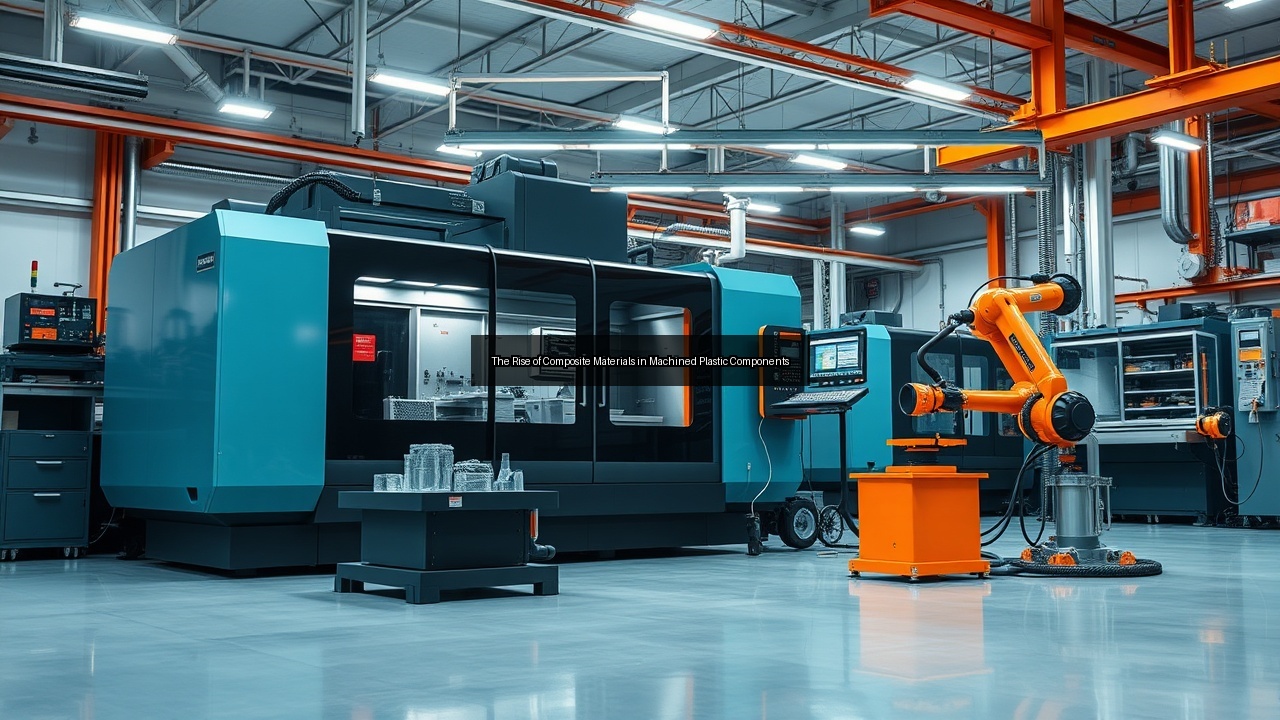
CNC machinery has revolutionized plastic fabrication by introducing automated precision and efficiency in the production of machined plastic components. Unlike traditional machining methods, CNC (Computer Numerical Control) technology uses computer programs to control machine tools, allowing for intricate designs and complex geometries. This automation reduces the risk of human error and enhances production speed, making it ideal for batch production scenarios. Manufacturers can produce consistent and high-quality components while maintaining tight tolerances. The adaptability of CNC machinery also allows for rapid prototyping, enabling companies to bring products to market more quickly. As CNC technology continues to evolve, its impact on the manufacturing landscape will further solidify the role of machined plastics in various industries.
Precision in Dimensions and Tolerances
Precision remains a defining feature of CNC machined plastic components. CNC machining allows for the creation of parts with extremely tight tolerances, often within a few thousandths of an inch. This level of accuracy is vital in applications where even minor deviations can lead to performance issues or failures. Manufacturers can achieve high dimensional machined plastic part consistency across large production runs, ensuring that each machined plastic part meets the required specifications. This precision is particularly important in sectors like aerospace and medical devices, where safety and reliability are paramount. The ability to maintain such tight tolerances not only enhances product quality but also minimizes the need for extensive surface finishing and post-processing, streamlining the overall production process.
Surface Finishing Techniques for Enhanced Performance
Surface finishing techniques play a crucial role in the performance of machined plastic components. Various methods, such as polishing, bead blasting, and chemical treatment, enhance the surface characteristics of the plastic, improving aesthetics and functionality. For example, polished surfaces reduce friction and wear, making components more durable and efficient in operation. Conversely, textured finishes can enhance grip and reduce reflectivity, beneficial in certain applications. Additionally, surface treatments can improve chemical resistance and UV stability, prolonging the lifespan of the components in demanding environments. By employing appropriate surface finishing techniques, manufacturers can significantly enhance the overall performance of machined plastic parts, ensuring they meet the rigorous demands of their respective industries.
Applications and Innovations in Machined Plastic Components
Industries Utilizing CNC Machined Plastic Components
CNC machined plastic components find applications across a diverse range of industries. The automotive sector relies on these parts for interior components, housings, and brackets, where lightweight and durable materials are essential. In the medical field, precision-engineered plastic components are vital for devices such as surgical instruments and implants, ensuring safety and functionality. Aerospace manufacturers utilize machined plastics for structural components and interior fittings, capitalizing on their strength-to-weight ratio. Additionally, the electronics industry benefits from CNC machined plastic parts for enclosures and connectors, where precise dimensions and surface finishes are critical. As innovation continues, more industries will adopt CNC machined plastics, expanding their applications and driving further advancements in technology and material science.
Future Trends in Composite Material Technologies
The future of composite material technologies in machined plastic components looks promising. Researchers machined plastic part and manufacturers are actively exploring new plastic machined components composite formulations that enhance performance and sustainability. Biodegradable composites, for instance, are gaining attention as companies seek environmentally friendly alternatives to traditional plastics. Innovations in nanotechnology are also paving the way for composites with enhanced mechanical properties and reduced weight. Furthermore, additive manufacturing techniques, such as 3D printing, allow for the production of complex composite geometries that were previously unattainable. As these trends evolve, the demand for high-performance machined plastic components will increase, driving the development of new materials and processes that redefine what's possible in manufacturing.
Case Studies: Successful Applications of Machined Plastics
Numerous case studies highlight the successful applications of machined plastics across industries. One notable example involves a company in the aerospace sector that required lightweight, durable components for an aircraft prototype. By utilizing CNC machined carbon-fiber-reinforced plastics, the company achieved significant weight savings while maintaining structural integrity, resulting in improved fuel efficiency. Another case study from the medical field illustrates the use of precision-engineered polycarbonate components in surgical instruments. These parts provided the necessary strength and clarity, enabling surgeons to perform procedures with enhanced visibility and reliability. Such successful applications demonstrate the versatility and effectiveness of CNC machined plastic components, showcasing their potential to meet the unique challenges faced by various industries.